Your Career & Experience Profile:
Career (or Academic) Focus
This result suggests that career direction, academic pathway, or practical outcomes may matter more to you than the broader college experience. You may be looking for a focused, efficient route toward a specific goal rather than prioritizing campus life, residential experience, clubs, social culture, or a traditional “college feel.”
This can lead to a smart and purposeful search, especially if the student is pursuing a clear field. But a career-focused search still needs careful testing. Some pathways require direct admission to specific majors, sequential prerequisites, high grades, clinical placements, portfolios, licensure steps, or competitive progression after enrollment. A college can sound practical without offering the most direct or reliable route.
A key planning question is whether the student needs a traditional four-year residential college, or whether a more efficient pathway could better support the student’s goals, budget, and readiness. For many students, learning about their career-connected aptitudes and interests can be an important step on this pathway.
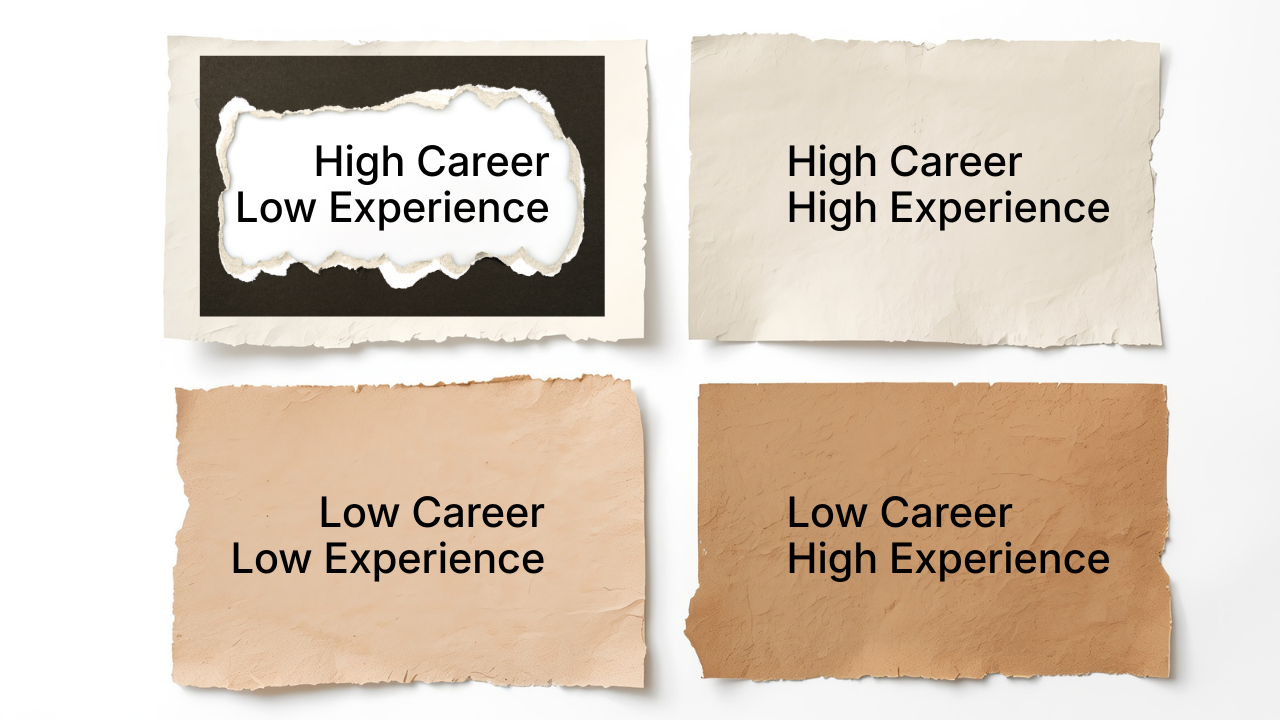
High Career Priority, Lower Experience Priority
You seek colleges that will support your academic interests and career-connected goals.
Planning Implications
This result may point toward colleges with clear degree maps, direct-admit majors, strong career services, licensure preparation, employer connections, job-based learning, co-ops, apprenticeships, commuter options, community college transfer pathways, or other efficient routes.
For competitive majors, the family should check whether the student is admitted directly to the major or must later compete for limited seats. This is especially important for fields such as nursing, business, engineering, education, health sciences, and other high-demand programs.
If the student’s career goal is strong, the family may also want to develop an aligned story before applications are submitted. Relevant coursework, job shadowing, paid work, volunteering, certifications, projects, or extracurricular commitments can help demonstrate that the student is not merely naming a major, but moving toward a plausible path.
This result may also be a reminder to compare traditional and nontraditional routes without assuming that one is automatically better. The best pathway may be the one that gives the student reliable access to the desired field with the right balance of cost, structure, support, and momentum.
Questions to Consider
What should we discuss as a family?
What should we check about colleges?
What might we be assuming?
What should we do next?